Placements

Daith piercing in Auckland — anatomy, healing, and what to expect

10 March 2026 7 min read By Platinum Point

The daith is one of the most anatomy-dependent piercings in the ear. It sits in the innermost fold of the cartilage — the crus of the helix — tucked tightly above the ear canal. Not every ear has the anatomy to support a daith piercing done well, and when it is done without proper anatomy assessment, the results range from a difficult healing period to a piercing that simply will not sit where it should.

At Platinum Point, daith assessments are part of every ear curation consultation and available as a standalone appointment at our Parnell studio. We see clients for daith piercings from across Auckland — Newmarket, Remuera, Ponsonby, the North Shore — and the question we are asked most often is not about healing or jewellery. It is about migraines. We will answer that honestly.

What is a daith piercing?

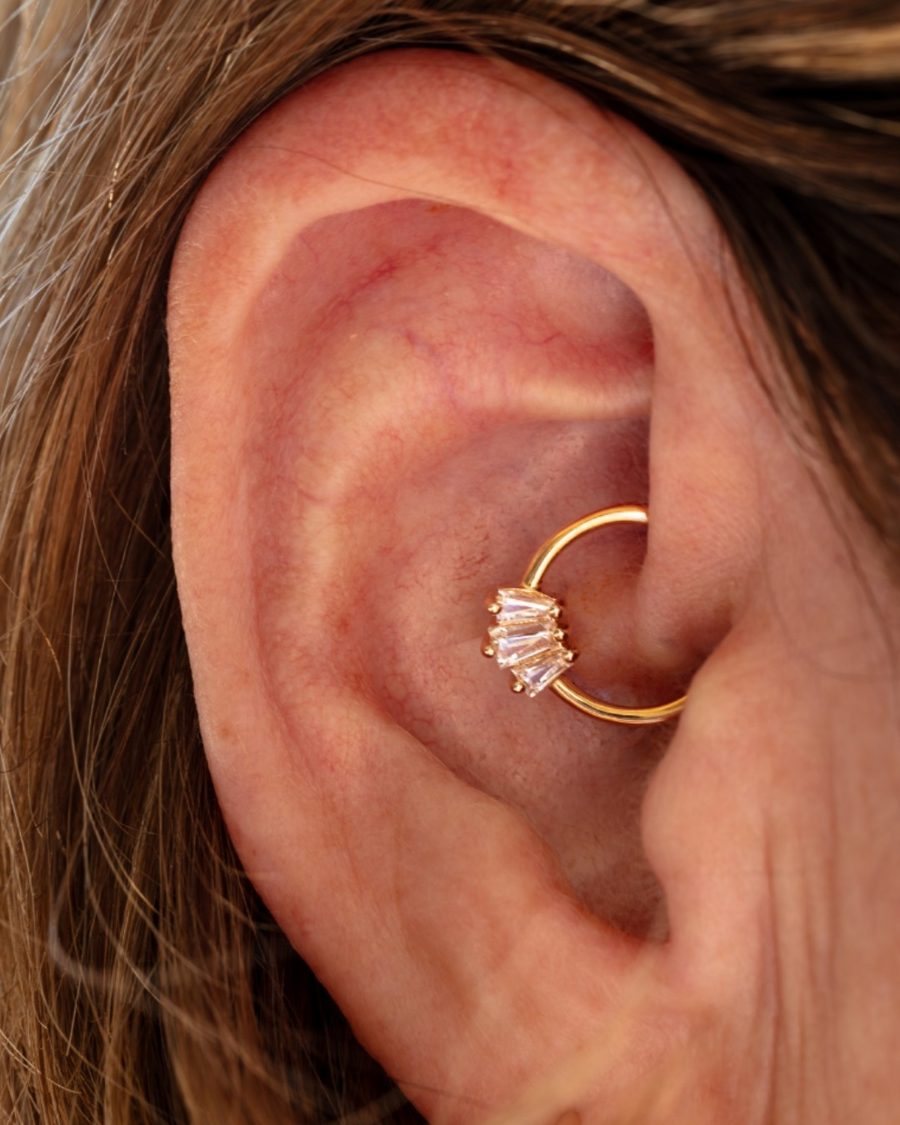
The daith (pronounced 'doth') is a piercing through the crus of the helix — the innermost cartilage fold of the ear, the small curved ridge that sits just above the ear canal opening. It is one of the more technically demanding cartilage piercings because the anatomy is compact and the approach angle is tight. The piercer works in a small space with limited visibility, and the tissue quality varies significantly between individuals.

Aesthetically, the daith reads differently to a helix or conch. It is partially concealed by the fold it lives in, which gives it an understated quality — visible when someone looks at the ear from the right angle, but not immediately obvious in the way a helix stud is. This inner-ear discretion is part of what attracts many clients to it.

Anatomy assessment — not everyone is a candidate

The single most important factor in a daith piercing is whether your ear anatomy supports it. The crus of the helix varies considerably between individuals:

  • Well-defined crus: A clear, pronounced inner fold with sufficient tissue depth. This is the ideal anatomy for a daith — the piercing has clean entry and exit points and the jewellery sits naturally in the fold.
  • Shallow or compressed fold: Less pronounced cartilage fold. A daith may still be possible but the approach is more challenging and the range of suitable jewellery narrows.
  • Absent or minimal crus: Some ears simply do not have enough of an inner fold to support a daith piercing that will heal and sit correctly. Proceeding in this anatomy produces a piercing that heals poorly or migrates.

At Platinum Point, we assess your anatomy before advising on whether a daith is appropriate. We would rather tell you it is not possible than pierce you in unsuitable anatomy. If your ear is not suited to a daith, we will suggest alternatives — a conch, a forward helix, or another inner-ear placement — that can achieve a similar aesthetic effect.

The migraine question — answered honestly

We are asked about this regularly from clients across Auckland and we think it deserves a direct answer. The claim that daith piercing reduces migraines is based on a theory that the placement stimulates an acupuncture pressure point linked to migraine pathways. It has circulated widely online and in popular media since approximately 2015.

The evidence: there are anecdotal reports from some individuals that their migraines improved after getting a daith piercing. There are no published clinical trials confirming the effect. The neurological mechanism proposed does not map cleanly onto established acupuncture or migraine physiology. The placebo response in migraine treatment is significant and well-documented.

We cannot make the migraine claim in good conscience. If migraine relief is your primary reason for considering a daith piercing, speak to a neurologist first. If you want the piercing for its own sake and are hoping it might help, that is a reasonable personal decision — but go in with realistic expectations.

We mention this not to dismiss anyone's experience, but because we think clients deserve honest information before making a decision. A daith piercing is a long healing commitment and significant jewellery investment. Make it for the right reasons.

What to expect at your appointment

A daith appointment at Platinum Point runs 30–45 minutes. Your piercer begins with an anatomy assessment to confirm your ear supports the placement. If it does, placement is marked and confirmed with you. The piercing itself is done with a curved needle that follows the angle of the fold — it requires a specific technique that differs from a standard cartilage piercing.

Starter jewellery for a daith is typically a small-diameter curved barbell in ASTM F136 implant-grade titanium, or a seamless ring if the anatomy allows. The curved barbell is generally preferred for initial healing because it sits stable in the tissue without the movement that a ring introduces. You return for a downsize and jewellery check at 12–16 weeks.

Healing timeline for a daith piercing

The daith is one of the slower-healing cartilage placements. The inner ear receives limited blood supply and the placement is in dense cartilage tissue. A realistic timeline:

  • Weeks 1–4: Swelling, tenderness, clear lymph discharge. Normal. The placement may feel tender to touch for longer than a helix.
  • Months 2–4: Surface healing progresses. The outside of the piercing stabilises. Do not change jewellery.
  • 12–16 weeks: Return for your downsize and jewellery check. The starter piece is assessed and replaced if appropriate.
  • 9–12 months: Full healing. Fine gold jewellery — BVLA clickers, hinged rings — can be fitted once the piercing is confirmed healed.
  • 12+ months: Full maturity. The fistula is stable and the piercing is considered settled.

The daith requires patience. Clients who rush the process — changing jewellery early, skipping downsize appointments, or sleeping directly on the ear — consistently report longer healing periods and more complications. Come back to us at our 389 Parnell Road studio if you have concerns during healing. Do not make changes to the jewellery without checking first.

Aftercare for a daith piercing

Daith aftercare follows the same principles as other cartilage piercings with one specific addition: the placement is hard to access for cleaning. The inner fold means you cannot always see the piercing clearly, and buildup of discharge or product residue in the fold is a common source of irritation.

  • Sterile saline spray twice daily. Direct the spray into the fold from both the front and behind. Allow 30 seconds and air-dry.
  • In the shower, let warm water run over the piercing. Use a clean paper towel or gauze to gently clear any crust — do not pick or use a cotton bud inside the fold.
  • Sleep on the opposite side. A travel pillow with a cut-out is particularly useful for daith piercings because the inner ear is directly compressed when you sleep on that side.
  • Avoid headphones that sit in the bowl of the ear during healing. Over-ear headphones are fine; in-ear earphones press directly against the daith site.
  • Keep hair products away from the inner ear.

Daith jewellery — options for healed piercings

The daith is one of the best placements for clicker-style jewellery. The inner-fold position makes rings that are hard to open inconvenient — a clicker snaps open and closed with one hand, which is significantly easier in a tight space. Options once healed:

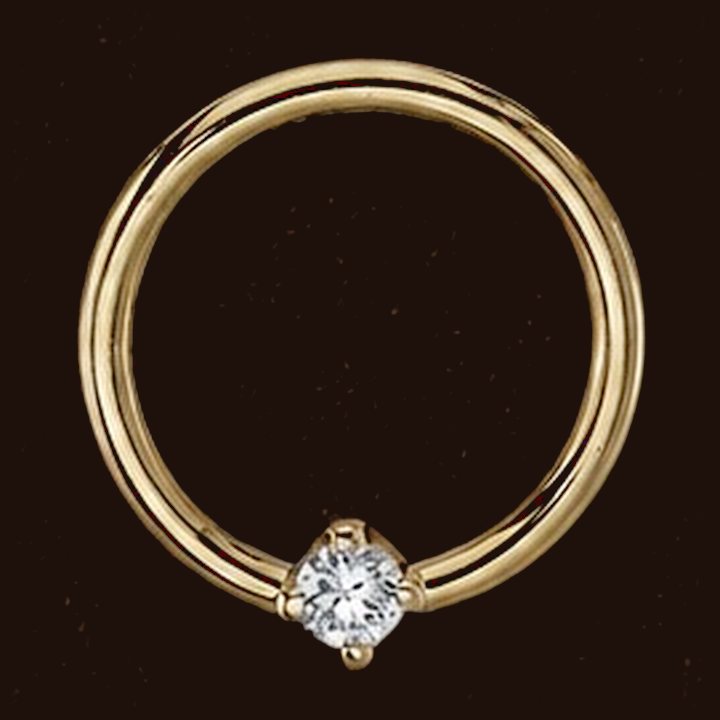
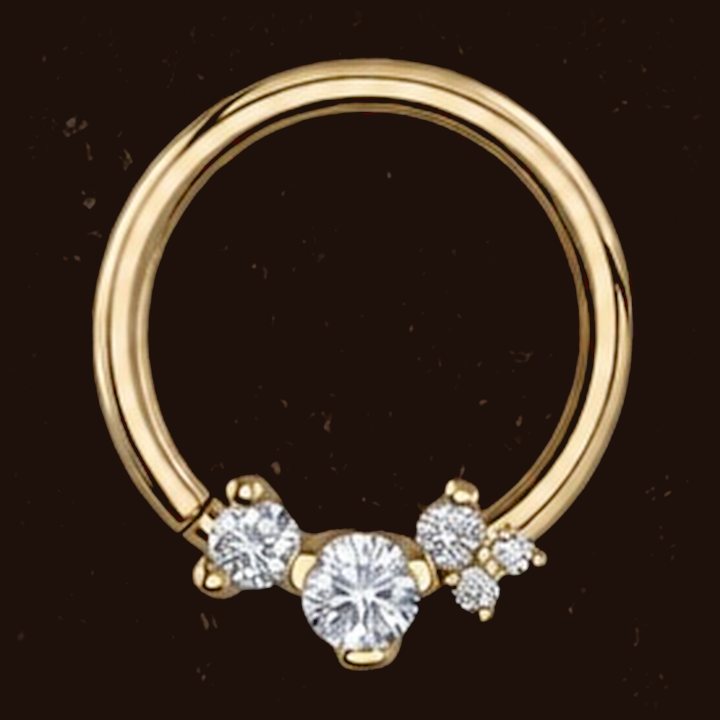
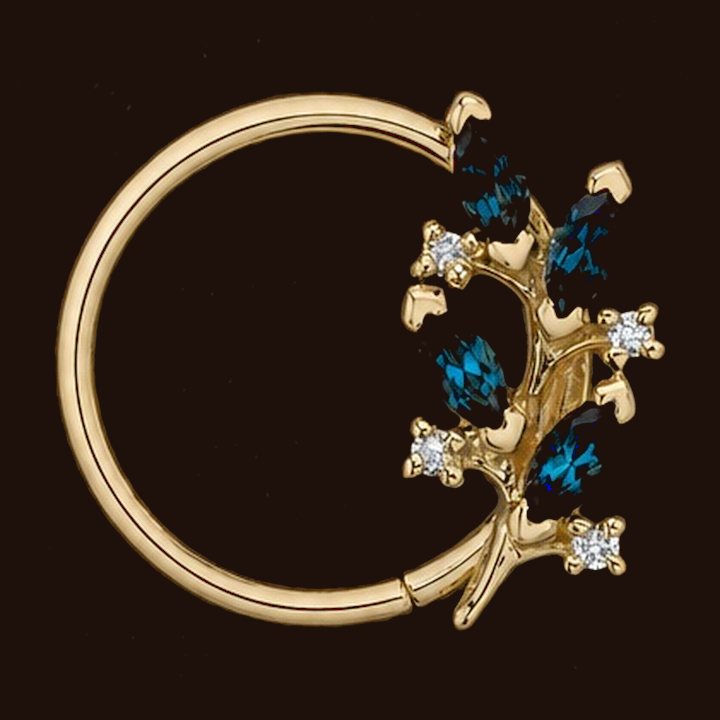
  • Hinged clicker rings: The most practical and popular option. BVLA produce several clicker styles in solid gold — plain, pavé-set, and with shaped gold elements — that suit the daith particularly well. The hinge makes opening and closing straightforward.
  • Seamless rings: A continuous ring that must be gently flexed open. More minimal than a clicker; preferred by clients who want the least visible join. Requires more flexibility to operate in the confined daith space.
  • Curved barbells with decorative ends: Some clients prefer to stay in a barbell long-term. BVLA produce curved barbells with threaded gem or gold ends that look elegant in the daith fold.
  • Horseshoe / circular barbells: A semicircular piece with two ends. Distinctive; sits differently to a closed ring. Suits a bolder aesthetic.

All jewellery at Platinum Point is BVLA — solid 14k or 18k gold and 950 platinum, handcrafted in Los Angeles. Browse our BVLA collection or call us on 09 949 0940 to discuss what will suit your anatomy and aesthetic.

Daith as part of an ear curation

The daith works well as part of a composed ear — particularly alongside a helix and lobe combination. Its inner position creates depth in the ear's visual layering, contrasting with outer-rim pieces. For clients planning a full ear curation, the daith is often considered early in the sequence because of its long healing timeline — placing it first means it has the most time to mature before the final look is complete.

If you are considering a daith as part of a broader ear plan, our ear curation consultation at 389 Parnell Road, Parnell, Auckland is the right starting point.

Booking a daith piercing in Auckland

Platinum Point is at 389 Parnell Road, Parnell, Auckland 1052 — open Monday, Wednesday–Sunday by appointment. Book online at platinumpoint.nz/book or call 09 949 0940. If you are unsure whether your anatomy suits a daith, book a standalone anatomy assessment before committing to the piercing.

Common questions about daith piercing in Auckland

Does daith piercing help with migraines?

There is no scientific evidence that daith piercing reliably reduces migraines. The theory links the placement to acupuncture pressure points, but no clinical trials have confirmed the effect. Many clients report positive results anecdotally. If migraine relief is your primary reason for considering a daith, speak to a neurologist first.

How long does a daith piercing take to heal?

Daith piercings typically take 9–12 months to fully heal. The daith sits in the innermost cartilage fold of the ear — dense, low-vascular tissue that heals more slowly than the helix or lobe. Initial surface healing occurs at 3–4 months but the fistula continues maturing internally for considerably longer.

Can everyone get a daith piercing?

No. The daith requires a sufficiently pronounced inner cartilage fold (crus of the helix). Some ears have a shallow or minimal fold that makes the placement anatomically unsuitable — piercing in this anatomy produces poor results. An anatomy assessment before booking is essential.

What jewellery is used for a daith piercing?

A curved barbell in implant-grade titanium is typically used as starter jewellery for a healing daith. Once healed, clicker rings and hinged segment rings are the most popular long-term options — they are easy to open and close in a placement that is difficult to access. BVLA produce several clicker styles that suit the daith particularly well.

Anatomy first.
Every time

Daith piercing at Platinum Point, Parnell — assessed, marked, and done right the first time.

← Back to the journal